It’s difficult enough to juggle a lot each day – full-time jobs, family responsibilities, endless chores – and somehow still fit in a fitness routine. When time is tight, pre-run fueling is often the first thing to get pushed. It’s tempting to head out the door without thinking much about food and deal with it later.

What you eat before a run influence how that run feels and how well you recover afterwards. Underfueling doesn’t just affect performance, but can contribute to lingering fatigue, lower motivation, and running just feeling harder than it should be.
There’s also a lot of confusion around pre-run nutrition. Eating before a run doesn’t automatically lead to weight gain or digestive discomfort. With a few simple strategies, it can actually help stabilise energy and hunger levels throughout the day, support more consistent training, and make longer efforts feel more manageable.
In this guide, we’ll look at what to eat before different types of runs: from short, easy morning sessions to longer or more demanding workouts, with a focus on practicality, flexibility, and finding what works best for you.
Fasted training and women’s recovery
For years, fasted cardio was promoted as a shortcut to fat loss and improved fitness. The idea is simple: running on an empty stomach encourages the body to rely more on fat for fuel. Much of the early research behind this approach, however, was based on male athletes and doesn’t always translate well to women’s physiology or real-life training.
That doesn’t mean fasted running is inherently bad. Short, easy runs done occasionally on an empty stomach can be perfectly fine for many women, especially when convenience or comfort is a priority. Context matters.
Where fasted training tends to cause problems is when it becomes the default for longer or more intense sessions. In those cases, consistently pushing without fuel can increase overall training stress and make recovery harder.
Training stress and recovery
Running is a physical stressor, and training without fuel can amplify that stress, especially during more intense workouts. Over time, intense workouts without adequate energy intake may contribute to lingering fatigue, slower recovery, and lower energy.
A small amount of fuel before running doesn’t eliminate training stress, but can help reduce it and support more consistent energy during and after the workout.
Glycogen availability
Carbohydrates are stored in the muscles and liver as glycogen: a readily available energy source during running. After an overnight fast, glycogen levels are naturally lower.
For short, easy runs (10-30 minutes) this usually isn’t an issue. For longer or more demanding sessions, low glycogen can lead to heavy-feeling legs, worsened performance, and a slower recovery. Eating before these runs helps ensure your body has the resources it needs to benefit from the training.
Long-term consistency and health
Consistently training hard without fuel can impact your long-term well-being. Over time, underfueling may contribute to recurring injuries, reduced bone density, loss of muscle mass, or persistent fatigue.
Short, easy fasted runs can fit into a balanced routine. Problems tend to arise when fasted training becomes the rule rather than the exception.
If you want to dive deeper into the science, Dr. Stacy Sims explains the female-specific risks of fasted training in this episode of the Huberman Lab Podcast.
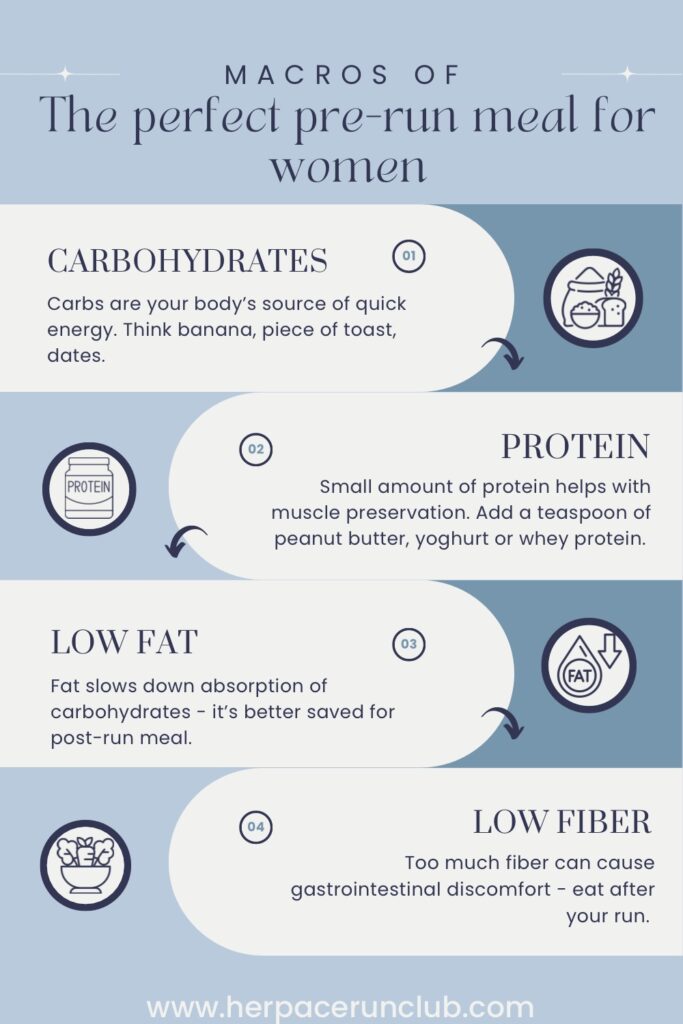
Macros of the perfect pre-run meal
What does the “perfect” pre-run meal actually look like? It comes down to a simple balance of macros that will give you steady energy without causing stomach issues.
Simple carbs: main source of energy
Carbohydrates are the preferred source of energy during running. Eating carbs before you head out will help top off your glycogen stores and give you the quick energy to run strong. Think simple, easy to digest carbohydrates – like toast with honey, a banana, or a granola bar.
Protein: just enough for muscle support
Protein is not essential as a part of your pre-run meal, but adding a small amount helps reduce muscle breakdown and supports recovery. The key is to keep it light – like a spoonful of nut butter or some yoghurt with fruits. Too much protein (especially dairy) can slow down the digestion and cause discomfort mid-run.
Protein works best in your post-run meal – it supports muscle recovery and helps you stay full and satisfied for longer. Learn more about Post-run nutrition or see my 7 easy high-protein breakfasts for busy runners.
Fat: best kept minimal
Fat slows down digestion, which is the last thing you want right before a run. Food high in fat like avocado, cheese and some meat are better saved for later in the day. Keeping the intake low will help your body access carbs quickly – and keep your stomach happy.
Fiber: save it for later
Fiber is essential for overall health and has countless benefits. But right before running it can lead to bloating, stomach discomfort, cramps – or an urgent bathroom stop. Skip the high-fiber cereals and veggies until later, when your digestive system can handle them without interrupting your run.
A note on caffeine
Many of us can not imagine a morning without a cup of coffee. But is coffee good before running? Caffeine can boost your mood and endurance. Just be mindful of timing and personal tolerance – too much of it can raise your heart rate and speed up digestion. In you’re prone to GI issues, test it on shorter runs before relying on it on long ones.
Quick and easy pre-run snack ideas
Pre-run fuel doesn’t have to be complicated or require a lot of prep. The recipe is easy: simple carbs, a bit of protein, minimal fat and low fiber. Getting it right will give you steady energy without upsetting your stomach.
If you’d like specific examples, inspiration, or my personal favourites, check out my post on the 7 quick & easy pre-run snacks to see simple, tried-and-tested options you can start using right away.
Morning vs evening runs
When it comes to fueling, the timing of your run makes a difference. Morning and evening runs come with their own consideration for energy, digestion and performance.
Fueling morning runs
After the overnight fast, your glycogen stores are naturally lower. It’s important to top up your energy stores. Small, easy to digest snack (like a banana with PB, or a slice of toast with jam) can give you a stronger start. Even a 100-200 calories of simple carbs and a bit of protein are enough to support short-to-mid length run without weighing you down.
Morning runs are my favourite way to start a day – they can set the mood right for the rest of it. Getting the nutrition in check will help you feel energised and focused, instead of sluggish.
If you’re trying to build a morning running habit, read How to become a morning runner: a realistic routine for busy woman.
Fueling evening runs
After a full day of meals, your energy store is probably good to go. In the evening, digestion becomes the main factor. Running immediately after a larger meal can cause discomfort, bloating, or even cramping. Ideally, you should aim for 1.5-2 hours before your run. Always listen to your body – if you’re hungry, have a small snack (carbs + a little protein).
Evening runs are fantastic way to de-stress and decompress. Timing the nutrition right around them will help you run strong and recover properly.

How to fuel long runs (over 60 minutes)
Long runs require a different approach than shorter workouts. While the same rules for pre-run melas still apply – focus on easy to digest carbs and a little protein – you may want to increase overall calorie intake. When your run goes beyond an hour, your body’s glycogen stores start to deplete, and mid-run fuel becomes essential to keep going. Proper nutrition helps maintain energy, prevents “hitting the wall”, and supports performance – especially for women.
Mid-run fueling: how much to eat during long runs
Most runners benefit from 30-90 grams of carbohydrates per hour, depending on intensity, body mass, and personal tolerance. It’s always a good idea to start on the lower end if you’re new to intra-run fueling. Always listen to your body and adjust – your tolerance will grow alongside the distance you cover. The goal of mid-run fueling is to top up the glycogen stores before they’re run out – to keep energy level steady without stomach issues.
Types of mid-run fuel
There are plenty of options for quick carbs while running:
- Sports drinks – carbs and hydration in one
- Energy gel and chews – convenient and fast-absorbing
- Whole foods/sweets – like dried fruits, gummies or candy
The best option is always the one that works for you, so test, mix and match to learn.
Hydration and electrolytes
Hydration plays an important, supporting role in long-run fueling. Hydrate well before heading out, drink to thirst, and consider adding electrolytes for runs over 90 minutes, in hot conditions, or if you’re a heavy sweater.
Race-day practice
Fueling mid-run effectively takes practice . Treat your long runs as a race-day rehearsals – test the amounts, types of food, the timing, and see what works best for you. Adapting your digestive system over time will help you avoid GI discomfort (and bathroom stops!) during the actual race.
Takeaways & tips for pre-run fueling for women:
Fueling doesn’t have to be complicated to be effective. Here are the main points to remember:
- Focus on carbs and light protein. Keep fat and fiber low – save heavy foods for recovery to avoid digestive discomfort.
- Adjust for timing. Morning runs need calories after an overnight fast, while running in the evening requires careful spacing from your meals.
- Add mid-run fueling for long runs. Experiment with carbs per hour, hydration, and different types of fuel during training so you’re ready for race day.
- Listen to your body. Everyone’s preferences and digestion responses are different – use your training to figure out what works best for you.
For practical examples, inspiration, and my personal favourites, check out my post on 7 quick & easy pre run snacks for busy women.
Read more: How to build a running habit that fits a busy schedule.
