Running in the rain sounds miserable – until you have the right gear.
The first step is accepting that you’ll get wet – you won’t get sick, and you won’t melt either! Learning to embrace the initial discomfort – instead of fighting it – can make you a more consistent and confident runner. Rainy runs take time to get used to, but they can be incredibly rewarding.
The right gear doesn’t keep you fully dry, but it keeps you warm, safe, and comfortable enough to keep going. Breathable, lightweight layers, shoes with good grip, and a few small accessories might be the difference between cutting your run short and finishing strong.
In Running in the rain: mindset, motivation, and practical tips, we dove into how to approach rainy training. In this guide, we’ll cover the gear: jackets, shoes, accessories, visibility tools, and a few post-run essentials to make running in the rain easier and more enjoyable – so you can keep showing up, no matter the weather.
Benefits of running in the rain
Running in the rain takes a little courage at first, but it quickly becomes one of those challenges that changes how you approach your training. When you stop waiting for the perfect conditions and go anyway, you build resilience and consistency that last beyond a single run. Each rainy day becomes proof that you can do hard things – and that confidence carries over into every part of your life.
Cooler temperatures can actually help your performance. You’re less likely to overheat, and your heart rate stays lower, which means you can often run longer or recover faster. Plus, fresh air and mild exposure to the elements can strengthen your immune system and boost your overall mood.
There’s also something undeniably peaceful about it. Once you get used to that calm rhythm, rainy runs can turn into a form of moving meditation – a reminder that showing up matters more than waiting for perfect conditions.

Best running jackets for rainy weather
A good rain jacket is one of the most useful and versatile pieces of running gear you can own. It doesn’t need to be fully waterproof – that often means no breathability and trapped sweat. Instead, it should protect you from rain and wind without overheating.
Choose a jacket that’s lightweight, breathable, and water-resistant. Look for ventilation panels to release heat, a slim fit to prevent fabric from flapping in the wind, a longer hem that covers your waistband, and reflective details for visibility.
Here are a few options worth looking at – all well-reviewed for both comfort and performance:
- Oiselle Say Nothing Jacket – premium option that’s lightweight, flattering, and impressively breathable for its level of water resistance. The brand is women-led, with a strong focus on creating performance gear designed by and for female runners.
- Brooks Canopy Jacket – a fan favourite that packs down small and offers great ventilation. The fabric feels soft, not crunchy, and the fit strikes a good balance between sleek and roomy enough for layering.
- Adidas Own The Run Jacket – affordable and reliable classic. Water-resistant with a comfortable fit, it’s a great pick for runners who want practical weather protection without overspending.
- Salewa Puez Aqua Jacket – a 2.5-layer hardshell jacket with a breathable, waterproof Powertex membrane. It’s a very light, although a bit stiff jacket that works in the messiest conditions. It actually doubles as my hiking jacket!
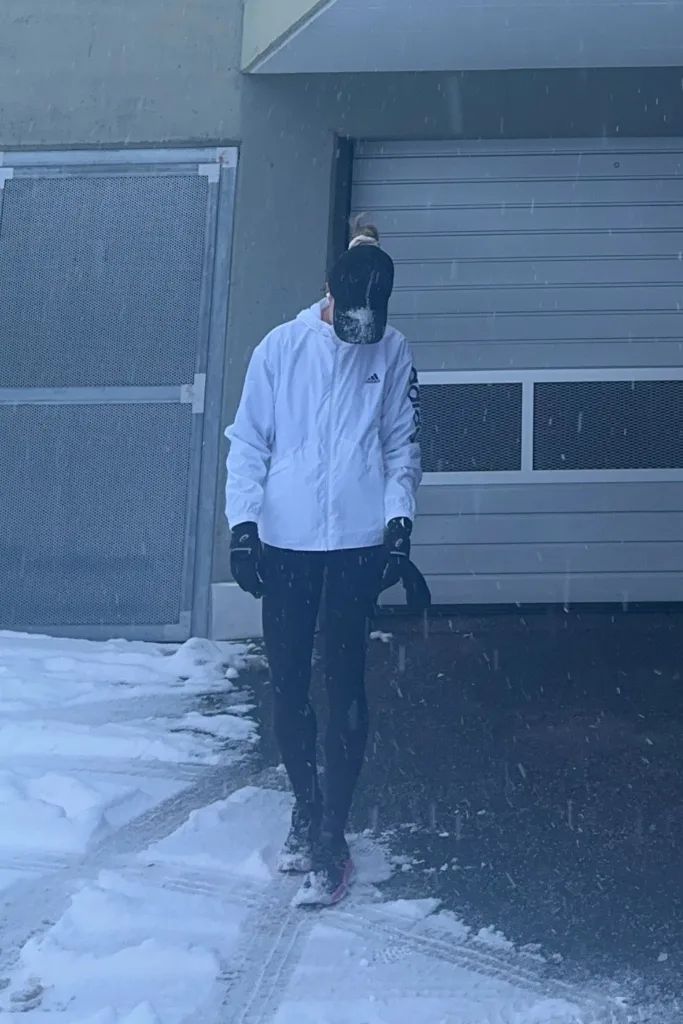
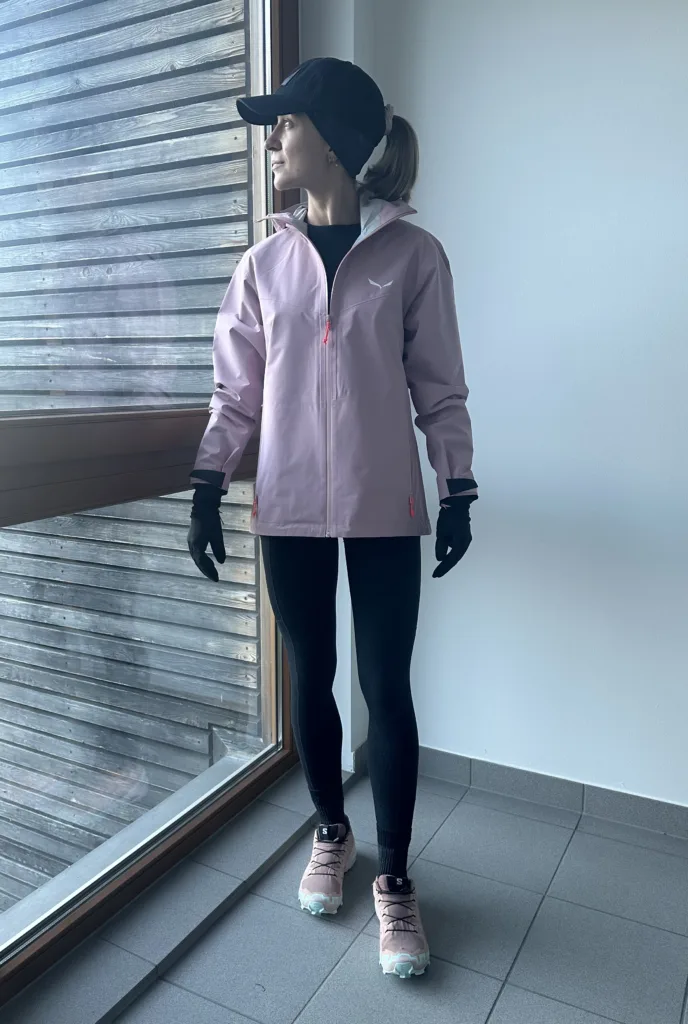
Even if you don’t plan to buy new gear right away, knowing what makes a jacket work will help you choose the right one easily in the future, or layer smarter with what you already have. The right outer layer can make the biggest difference on rainy days, and it’s one of the few pieces truly worth spending money on.
Running shoes for rainy weather
When it comes to rainy runs, the goal isn’t to stay perfectly dry – it’s to stay comfortable and steady on your feet. Choosing shoes with good traction will keep you running confidently through puddles and slick pavement.
Waterproof shoes might sound ideal, but they’re not always the best choice. They work best on muddy trails or deep puddles, but they can trap sweat and make your feet feel damp and cold. For most rainy runs, breathable shoes paired with merino wool socks will keep your feet warmer, drier, and far more comfortable overall.
Here are a few of my favourite shoes that perform well in wet conditions:
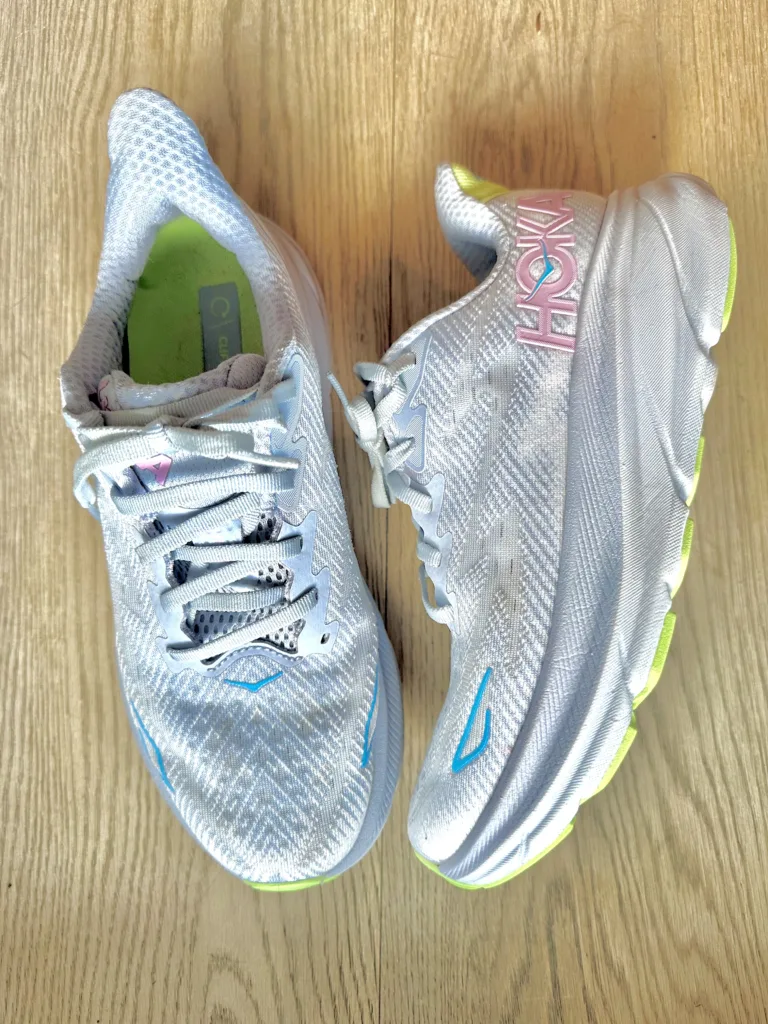
Hoka Clifton 9
My go-to shoe for everyday runs on the road. It’s soft but springy, with just enough grip to handle light rain and wet pavement. They dry quickly and are easy to clean. The cushioning makes it great for recovery runs or longer sessions when I want something easy on the legs, but you can pick up the pace in them as well.
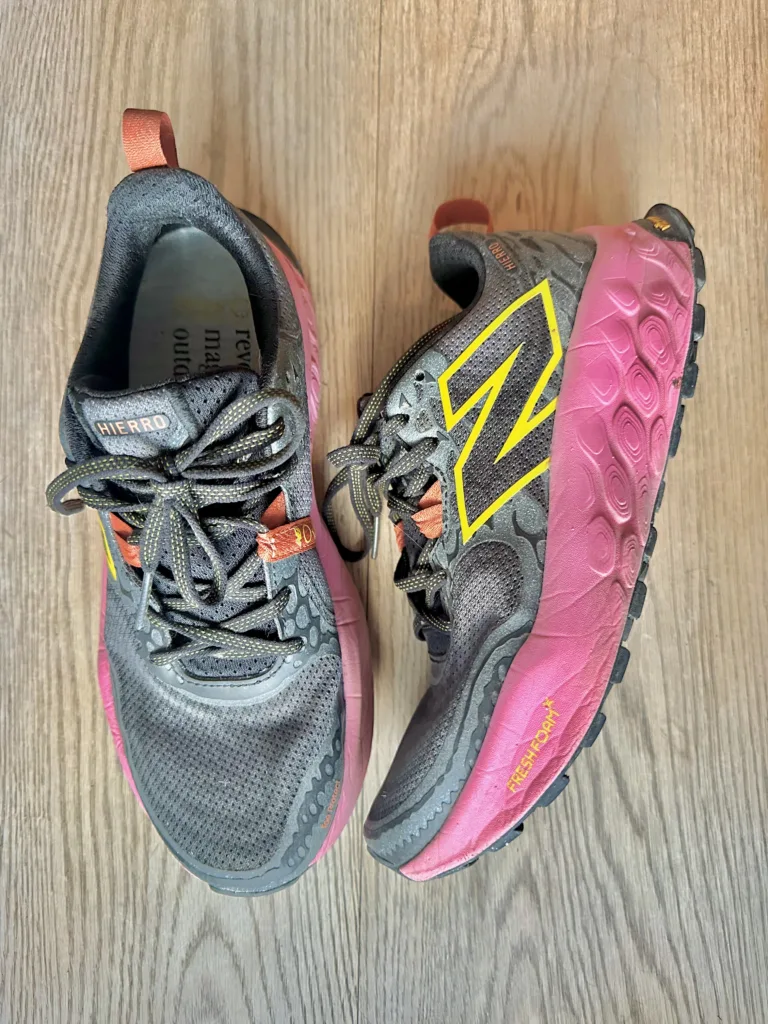
New Balance Hierro v7
My pick for road-to-trail days or routes with puddles, gravel, or light mud. The Vibram outsole gives reliable traction, and the upper drains and dries quickly if you step into something deeper than planned. It feels sturdy without being heavy, which makes it a really versatile all-weather option.
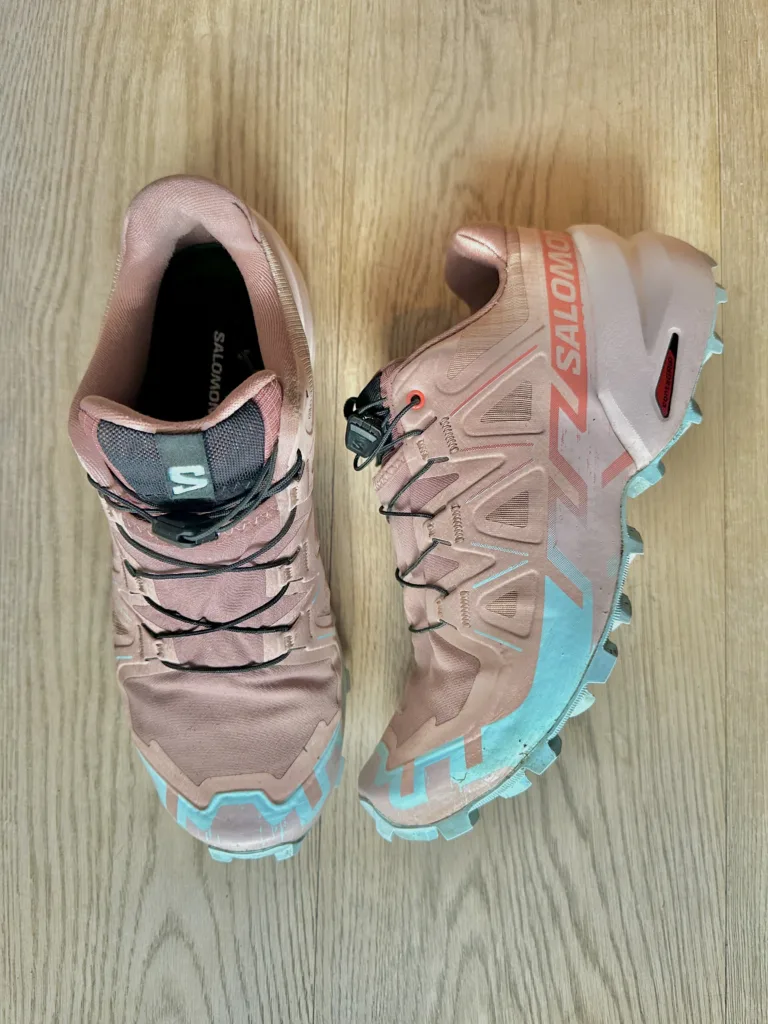
Salomon Speedcross 6
The pair I reach for trail running and when conditions get messy. The grip is incredible – it handles mud, slush, and wet leaves with zero slipping. They’re firmer than my road shoes, but that extra stability makes me feel confident on uneven terrain or winter trails.
Your current running shoes will probably work just fine unless they’re particularly slippery. The only pair I skip when it’s raining are my Adidas Evo SL – just because they’re white, and I don’t want to deal with washing them too often!
After your run, rinse off any dirt, then stuff your shoes with newspaper or use a shoe dryer to keep them fresh and ready for your next session.
Socks & base layers
What you wear closest to your skin matters most when it rains. The right fabrics help regulate temperature, manage sweat, and prevent that clammy feeling that can quickly ruin a run.
Start from the ground up: merino wool socks are one of the best small upgrades you can make for rainy weather comfort. They stay warm even when damp, dry quickly, and resist odour far better than standard synthetics. I like Wrightsock Cool Mesh: they’re light, breathable, and don’t cause blisters. A good pair can easily outlast several seasons of heavy use – and make a surprising difference in how comfortable your runs feel.
For clothing layers, stick with moisture-wicking technical fabrics that pull sweat away from the skin. On colder days, a merino base layer works perfectly under a rain jacket without overheating.
If you’d like more layering ideas for colder weather, check out my Winter running layering guide.
Gloves, hats & accessories
Rain has a way of making cold feel colder – especially on your hands. Even light rain can leave your fingers numb faster than you’d expect, so a good pair of running gloves is worth keeping on standby.
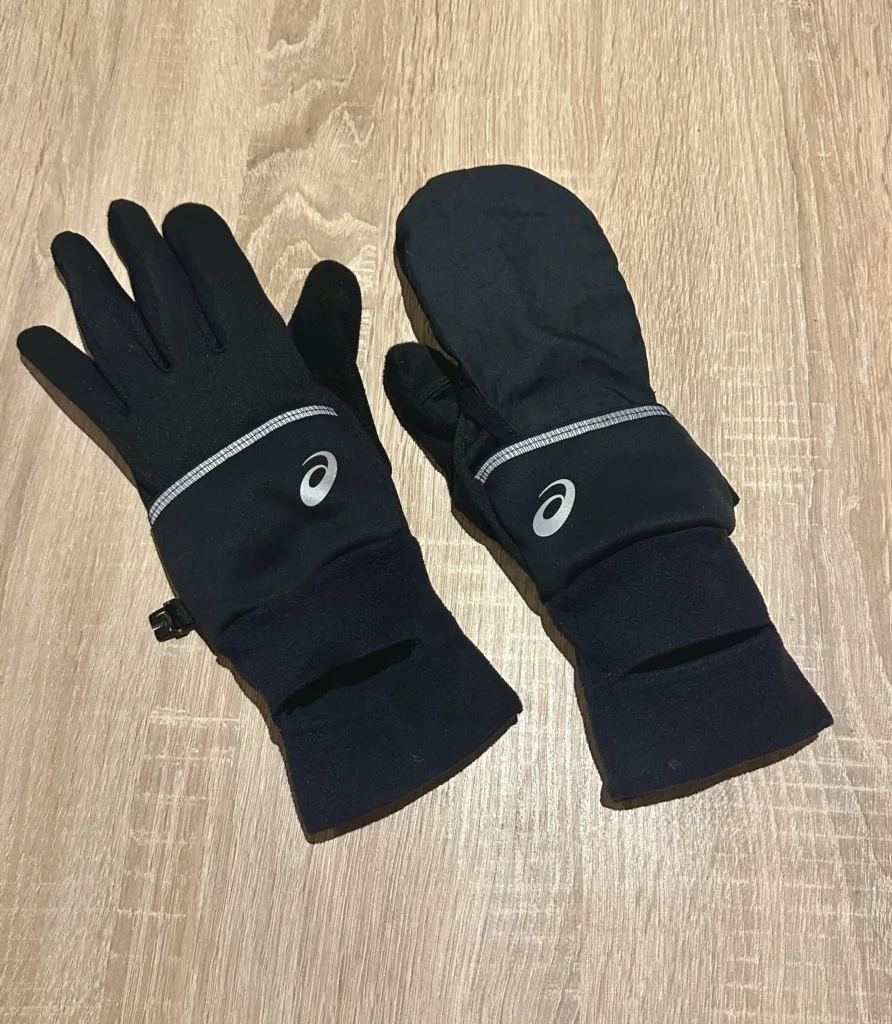
Look for fleece-lined, convertible styles with a windproof shell and touchscreen-friendly fingertips. Asics and TrailHeads both make great options that balance warmth with dexterity, so you’ll still be able to use your watch or phone mid-run without freezing your hands off.
A cap with a firm brim helps keep rain out of your eyes and face, and a lightweight buff or neck gaiter adds protection when the wind picks up. These small pieces don’t take up much space, but they make a huge difference in overall comfort when the weather turns.
Visibility & safety
Covered sky and rain often mean lower visibility – for both you and drivers. Staying visible is non-negotiable for safety and confidence. Knowing you can be seen lets you relax and focus on your run.
A few simple tools go a long way here: reflective clothing, vests, clip-on lights, or armbands can make you stand out in dark conditions. The Noxgear Tracer 2 is an amazing choice — a light-up reflective vest that’s comfortable, adjustable, and visible from every angle. And it looks phenomenal!
For more practical ideas on staying safe and comfortable in low light, check out Running visibility gear and tips for early morning and evening runs – they work just as well in rainy conditions.
Post-run care
Once you finish your run, it’s time to switch to recovery mode. Taking a few minutes to care for yourself – and your gear – goes a long way in staying comfortable and consistent in the long term.
Gear care
Start with your shoes: rinse them off and let them dry. I use an electric shoe dryer – it’s honestly one of my favourite under-$30 gadgets that gets used all-year round. It dries shoes quickly and evenly, prevents odour buildup, and keeps them ready for your next run. If you don’t have one, stuffing them with newspaper works well, just remember to replace it after an hour or two.
Base layers should be washed after every run to remove sweat and bacteria, but mid-layers and jackets don’t need a full wash each time. Hang them to air dry after your run, and wash only when they need a refresh.
For water-resistant or technical fabrics, use a gentle detergent made for performance gear, as regular laundry products can break down the coating over time. Nikwax and Granger’s are both great options, helping maintain the fabric’s breathability and water repellence so your gear lasts longer.
Recovery routine
Take a warm shower, change into dry clothes, rehydrate, and warm up with something comforting – a hot tea, coffee, or my winter favourite, a salty chocolate electrolyte drink from Re-lyte. Then spend a few minutes on recovery work: a quick foam-rolling session or gentle stretching. These small habits help you bounce back faster, prevent stiffness, and make it easier to stay consistent.
If you’d like more recovery ideas for busy schedules, check out:
Sustainable shopping tips
Reuse and repurpose
You don’t need a closet full of high-tech gear to run comfortably in the rain. Prioritise versatile pieces that can handle multiple seasons, and look for items you can repurpose. I use my base- and mid-layers for skiing and hiking as well, wear the Asics gloves all winter long, and run in my everyday caps.
Shop smart
Shop off-season or look for older models and colourwaysto save on price without sacrificing performance. Brands often update styles every year, but the technical features rarely change all that much.
Shoe care & replacing
You can clean your shoes safely in a washing machine: rinse them off first, remove the insoles and laces, place them in a pillowcase, and wash on a gentle program with a hoodie or a blanket to cushion them. Avoid putting your shoes in the dryer, as the heat can cause damage.
Replace your shoes every 300-500 miles: the exact timing depends on your weight, running form, terrain you run on, and sole type. If you start noticing new pains and niggles, it might be the time for a new pair. You can often “retire” your running shoes for walking if they lose their springiness, but still look good otherwise.
Small, thoughtful purchases add up over time. Investing in functional gear that lasts – and taking good care of it – is better for your budget, your running routine, and the environment.
Final thoughts
Running in the rain takes preparation and a little courage, but once you have both, it becomes just another part of your routine – and a surprisingly rewarding one. The right gear can turn wet, grey days into steady progress and consistency that lasts.
If you’d like to dive deeper into the mindset side of rainy runs, take a look at Running in the rain: mindset, motivation, and practical tips. It’s a motivation guide for those days when the weather tests your routine a little more than usual.
Read more: How to build a running habit that fits a busy schedule.
Sign up for The Extra Mile newsletter down below to get new posts notification and a regular dose of running motivation – rain or shine.
