January always feels like a fresh start. A clean calendar, a new spark of motivation, and the hope that this year, the habits you start will actually stick. But most New Year running resolutions fall apart because they’re too ambitious, too intense, or simply unrealistic once real life gets busy again.

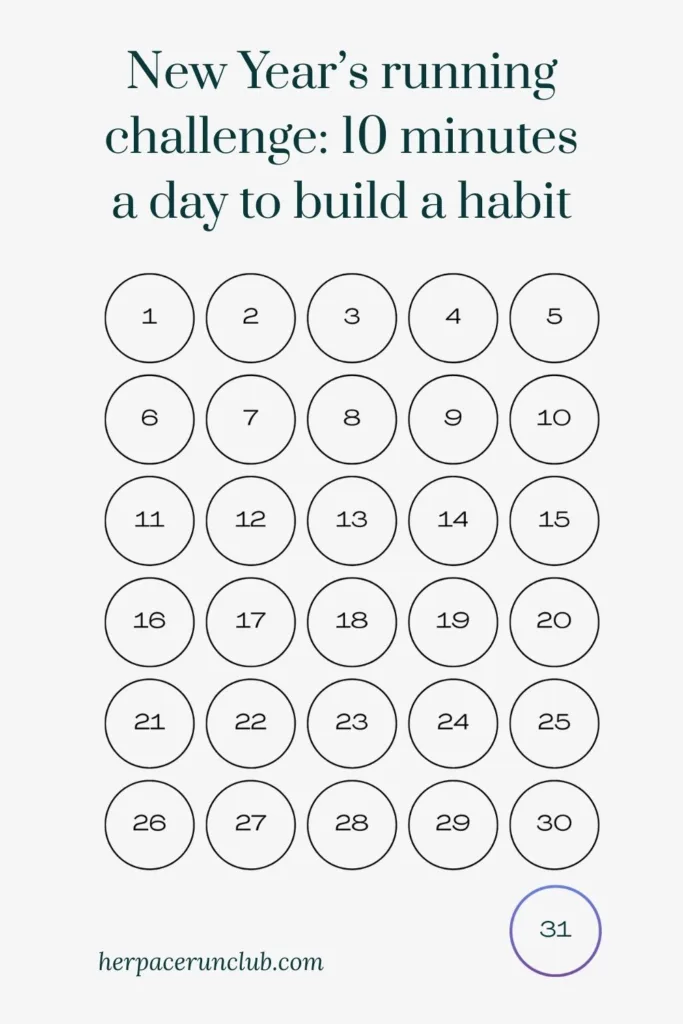
The New Year’s running challenge is different. There’s no specific pace or distance to chase. It’s 10 minutes a day: just enough to show up, move your body, and build a routine you can actually keep.
This is a month-long commitment to building a habit first – fitness, endurance, and confidence will follow. January is about showing up, creating consistency, and proving to yourself that you can weave movement into your real life without pressure.
Let’s break down how the challenge works and why this tiny, daily commitment can transform your entire running routine for the rest of the year.
10-minute rule
Most people overestimate what they can do in a month and underestimate what they can achieve with small, daily effort. Ten minutes might sound like it’s too little to bring real results. But that’s exactly why it works:
- It lowers the mental barrier. Any beginner can run, jog slowly, or walk for just 10 minutes.
- It builds consistency. Daily repetition wires the habit in quickly.
- It removes overthinking. You don’t need a plan, just the commitment to show up daily.
- It’s doable. Busy day? Low energy? Cold morning? Ten minutes is still manageable.
- It builds identity. When you show up every day, running becomes something you do – and you start to see yourself as a runner.
The goal is to simply show up and move, every day. There’s no pace or distance goals – every run counts. When the pressure drops, consistency builds easier.
Read more about building a consistent routine when you’re short on time: 10-minute rule in running.

31-day running challenge
This challenge is intentionally simple. No complicated weekly structure, no progression charts, no strict intervals unless you want them. It’s designed to fit your life, not take it over.
The framework
Every day: move for 10 minutes.
Movement options: run, slow jog, run/walk intervals.
One day each week: active recovery day – a 10-minute walk.
That’s it.
You can choose to run continuously, do run/walk intervals, or mix and match – depending on your starting fitness, daily energy level, and how well recovered you feel. Every movement counts. There’s no right or wrong way, only what feels manageable for your body on a given day.
If you’re a beginner, run/walk intervals are the best place to start – alternate between 30-60 seconds of easy running and 1-2 minutes of walking. Keep it slow: if you’re gasping for air, you’re going too fast. Take a walk break.
If you’re already running a bit, or returning after a break, make these 10-minutes an easy, zone 2 run to start. Some days you might decide to go faster or longer. Some days, you might still need a walk break – and that’s okay.
There’s no need to push intensity at the beginning. The challenge builds a habit by repeating the daily action. Every time you put on your shoes, step outside, and take those first few strides, you’re carving a deeper groove in your routine. That groove is what keeps you going long after January ends.
Active recovery day
Many beginners see rest as “losing progress,” but rest is a non-negotiable part of your training. Your body doesn’t get stronger while working out – it rebuilds stronger in rest and recovery periods.
Walking-only days reduce stress on joints, support recovery, and help prevent mental burnout. Consistency doesn’t mean pushing hard every day, and when movement feels easy and enjoyable, it’s way easier to keep showing up, day after day.
Intentionally scheduling a gentle rest/recovery day reinforces something important: not every day has to be intense to be productive. Rest is just as important as training in a truly sustainable routine.
Read more: Running recovery routine: time-saving habits that fit busy schedules.
Habit over performance
Many people start the year thinking they need to run fast or far to make progress, but that comes later. As a beginner, let January be about showing up, keeping it small, and making movement feel like a natural part of your day.
If you’re slow, walk more than you run, or feel awkward the first week – great, you’re doing it! You’re not training for a race yet; you’re training your body and mind to expect movement, and that foundation is what carries you through the rest of the year.
Read more: How to build a running habit that fits a busy schedule.
Daily commitment
Technically, your daily commitment will be a little more than 10 minutes.
Getting dressed in winter layers, tying your shoes, maybe grabbing a headlamp, maybe commuting to a nearby park, showering afterwards… it all takes time.
But that’s actually one of the biggest benefits of the challenge.
These tiny “around the run” actions are exactly what build a real running routine. You learn how to prepare your gear the night before, how to hydrate and fuel with intention, how to warm up, cool down, recover, plan, and track your runs.
Those behaviours are the habit. The 10-minute run is just the anchor.
You’re training your brain to think: “Running is what I do. This is who I am.”
That identity shift – not the miles – is what makes your running habit stick long after the New Year motivation fades.
Gear to start
You don’t need fancy gear, a running watch, or a full shoe rotation to complete this challenge. Keep it simple.
Must-have: a comfortable pair of running shoes.
If you’re new to running or unsure what to choose, start here: Beginner running shoes: guide to the perfect first pair.
A comfortable, well-fitting pair will make your daily 10 minutes feel smoother, safer, and more enjoyable.
Nice-to-have:
- warm layers for January (read: Winter running layering guide)
- a reflective vest or headlamp (read: Winter running essentials)
- storage: leggings with pockets or a belt for keys/phone
Anything beyond this is optional. Build a habit, not a gear collection (yet!).

Best time to run
There’s no perfect time of day to run – the best time is simply the one that fits your real life. Morning runs feel peaceful and grounding, with fewer distractions and a mood boost from daylight. Lunchtime runs offer a consistent time, and much needed break from screens. Evening runs work great too: you’re already fueled, the day is behind you, and they’re a great way to unwind.
When it comes to building a habit, consistency helps a lot. Running at the same time each day removes decision-making and makes the routine feel automatic. But life isn’t always predictable, and rigid schedules can backfire.
Think of it this way: it’s helpful to have a default time you aim for, but stay flexible and adapt when needed. Your running habit will form around the time that feels the least mentally heavy and the easiest to repeat, even if that shifts day to day.
Staying motivated
Even with a tiny 10-minute goal, motivation will dip around week two or three anyway – that’s normal. These small strategies help you stay consistent:
Make it non-negotiable: treat your 10 minutes like brushing your teeth or taking a shower. You don’t question it, you just do it.
Lower the pressure: a run-walk counts. Slow jogging counts. Walking-only days count.
Pair it with something enjoyable: save a favourite podcast or playlist just for your runs.
Track your wins: seeing your progress visually is surprisingly powerful.
Prepare the night before: less friction – less excuses.
Remember the purpose: your speed genuinely doesn’t matter at the beginning. You’re not training for performance – you’re building a foundation. That intention makes everything easier.
Flexible discipline
Life will happen – it always does – and you might miss a day. That’s not failure, and it doesn’t erase your progress. You don’t need to start over; you just pick it back up the next day. Consistency doesn’t mean perfection, it means coming back again and again.
Beyond January
By the end of the month, you’ll probably feel a real shift. Putting on your running clothes feels natural, stepping outside isn’t intimidating anymore, and your body starts to recognise daily movement as normal. You might even look forward to the mental reset – that quiet pocket of time that’s just for you. Most importantly, you’ll trust yourself more. Running begins to feel less like something you’re trying to do and more like something that simply fits into your life.
From here, you can keep the 10-minute habit as your baseline or slowly build on it: add a longer weekend run, try my gentle 4-week plan, or work towards running a 5K with C25K. Whatever you choose, you’ll be building on a foundation that’s truly sustainable, because it fits your own schedule. When there’s no pressure or comparison involved, consistency becomes easier – you build a routine that lasts.
Final thoughts
The New Year’s running challenge is a way to build habits that last beyond January by showing up for yourself, consistently.
Ten minutes a day is intentionally small. It’s a non-overwhelming, non-intimidating way to build confidence and trust in yourself – trust that you can do hard things when you put your mind to it.
This tiny habit can be the start of your running journey, and grow into a routine that can last through seasons and years.
Here’s to a month of small steps that build something big.
You’ve already taken the first one.
