
As the days grow shorter and the temperature drops, keeping up a running routine can feel harder than ever. Getting out from under a warm blanket to face the cold takes real dedication. Especially when it’s still dark outside.
Running in cold weather is safe when you’re well prepared. It won’t make you sick – it can actually boost your immune system, mood, and performance. All you need is the right gear, a few smart adjustments, and motivation to actually get out the door.
Why you should keep running through the winter
Maintaining your running habit through winter season has countless benefits. You’ll build endurance, strengthen mental resilience, and set yourself up for major progress once spring arrives. Cold exposure can support your immune system and leave you feeling energised and clear-minded all day long. With the right mindset, winter may just become one of your favourite seasons to run.
Flexibility around the weather
Winter running is all about being disciplined, but you also need to be adaptable. Always check the conditions before you head out and adjust accordingly. If conditions are extreme (ice, deep snow, or storms), move your session indoors. Go to a track if you have access, or use a treadmill – they’re great for interval training and speed work. Or swap the days around and do some cross-training, like pilates or bodyweight HIIT.
Consistency matters more than chasing the mileage at all costs. Don’t run in unsafe conditions – it’s better to skip a day than risk injury and be sidelined for months. The goal is to keep your movement habit intact, even when the plan changes.

Choosing the right winter running route
Winter isn’t always the best time to explore new paths or unlit trails, especially in darkness. Stick to familiar, well-lit routes with even surfaces whenever possible. Knowing your surroundings helps you spot icy patches, avoid deep puddles, and stay oriented in low visibility.
If the weather’s really harsh, consider running loops around your house or your car instead of venturing far out. It may not sound exciting, but it’s practical – you can easily pop inside to warm up, rehydrate, change clothes or shoes if you need to. These short, repeatable loops are one of the best winter running tips out there. They keep you close to comfort while still letting you log quality miles outdoors.
Dressing smart for cold weather runs
Clothing
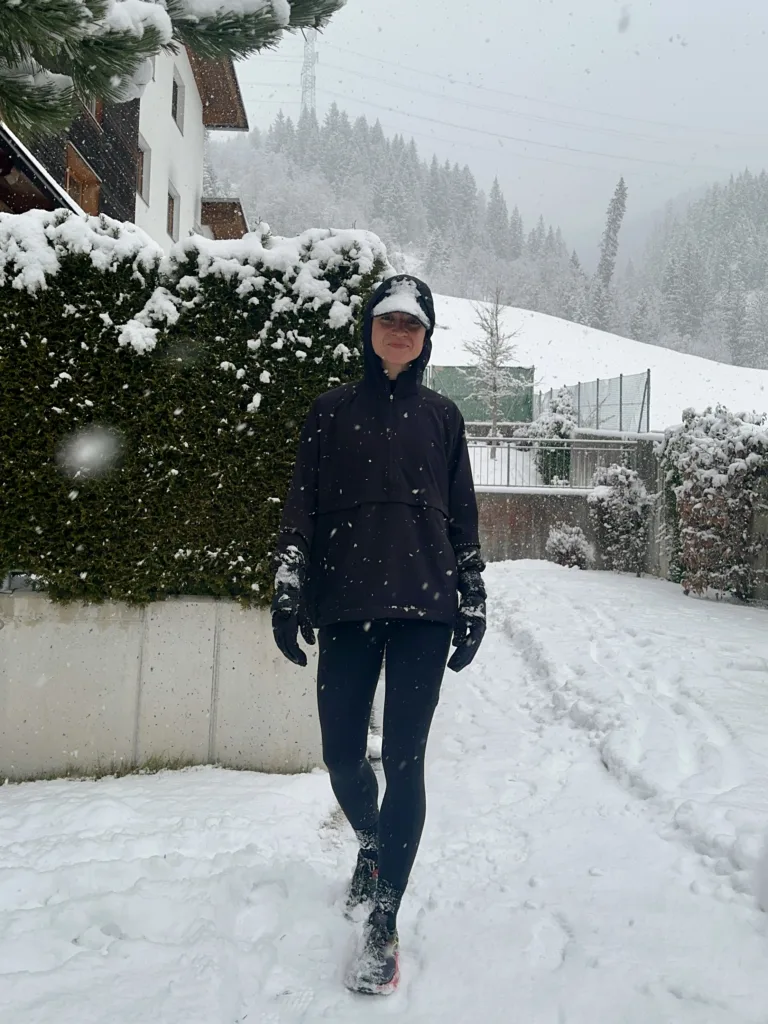
Choose moisture-wicking fabrics and avoid cotton. Dress as if it’s 10-20°F (5-10°C) warmer than the actual temperature. You’ll warm up quickly once you start moving.
For quick outfit suggestions, check out DressMyRun.com – it factors in not only temperature at your location, but also wind and humidity. I’ve found it remarkably accurate for picking the right gear.
Accessories
Cold hands, ears, and feet can make even a short run miserable. Don’t skip the little things. An ear warmer or a headband, and a lightweight hat can make a huge difference in comfort.
I also recommend having two pairs of gloves: thin ones for milder days and heavier pair for freezing, windy conditions. You can even layer them.
A neck gaiter of buff adds extra protection when the wind picks up, and merino wool socks help keep your feet warm and dry without overheating. Small upgrades like these can turn a freezing jog into an enjoyable winter workout.
For details and recommendations check out Winter running essentials.
Shoes
Traction is key. Trail shoes or slip-on ice grips (like Yaktrax) help on slick surfaces. Waterproof shoes aren’t always ideal – they can trap sweat and moisture, leaving feet feeling damp and cold. Personally, I prefer breathable shoes paired with merino wool socks. Even after stepping into an icy puddle, they let all the moisture out quickly, keeping my feet comfortable.
Layering
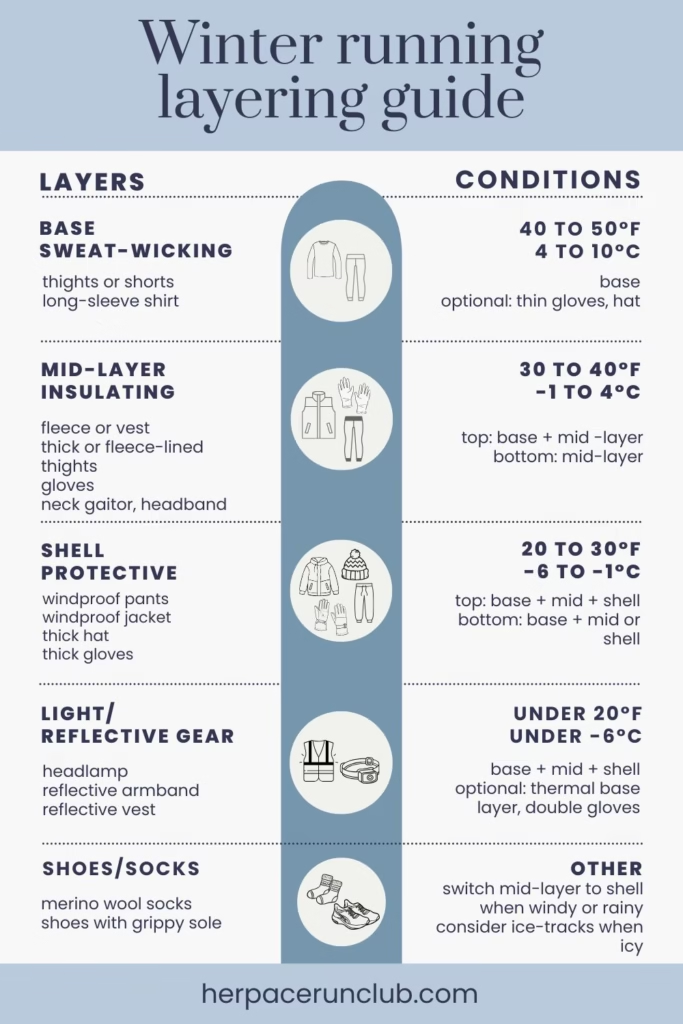
Layering is the winter running hack. Combine a base layer, an insulating layer and wind- or water-resistant shell.
For a deeper breakdown, check out my ‘Winter running layering guide: what to wear for cold weather runs’ – coming out on Thursday.
Habit hack: To make your morning smoother (and avoid talking yourself out of running), lay out your running clothes the night before. Morning-you will thank evening-you.
Read more: How to become a morning runner as a busy woman.
Getting ready for winter running
Warm up indoors
Cold muscles are more prone to injury. Do a short dynamic warm-up inside. Moves like leg swings, hip circles, and hamstring stretches work great to loosen you up and raise the body temperature and heart rate before stepping outside.
Pre-run fuel
Your body needs even more energy to run in the cold – both for the workout and to keep you warm. Have a quick carb-rich snack, like a banana, slice of toast, or a granola bar.
See my ‘Pre-run fueling guide – what to eat before morning, easy, and long run’ if you’d like to learn more.
Hydration
Cold, dry air can dehydrate you without you realising it. It’s personal, but for winter runs under an hour, pre- and post-run hydration is usually enough.
For longer runs, carry water in an insulated handheld bottle or wear a hydration belt or vest under your outer layer.
Start slow
You might feel chilly at first, but remember, the first mile is a lie. Take it slow to get your body temperature and heart rate up gradually before increasing pace.
Stay safe and avoid common winter running challenges
Ice
Shorten your stride, increase cadence, and stick to well-gritted surfaces like gravel or non-technical trails.
Cold
Protect your hands, ears, and toes. Watch for signs of frostbite. Apply Vaseline or Aquaphor to lips (or, like me, over your cheeks and eyelids when it’s really freezing). Single-use hand warmers work great inside gloves.
Darkness
Avoid dark clothing, wear reflective gear like a vest or an armband, and use a headlamp or clip-on light.
Read more: Running visibility gear and safety tips for early morning and evening runners.
Above all, always prioritise safety over pace or distance. You’ll hit your PR soon enough – winter miles pay off in the spring.
Keeping winter runs enjoyable
Mindset
When motivation dips, focus on how good you’ll feel after your run. This satisfying feeling of starting your day doing the hard thing – and succeeding – can set the tone for your entire winter. Check out my Winter running motivation post for a detailed breakdown on how to stay consistent through colder seasons.
Accountability
Find a local run club, virtual group, or a running buddy to keep each other consistent when it’s cold and dark out.
Post-run ritual
Create a small post-run self-care routine. Even 10 minutes to stretch, journal, or enjoy a quiet coffee may help reinforce your habit.
Goal race
Find a winter race that you train for – whether it’s a half-marathon in March or a January park run. Having a clear goal with a timeline can help keep you on track and boost the motivation.
Post-run checklist: warming back up, refuelling, recovery
- Change immediately: Get out of damp clothes right away to prevent chills.
- Hot drink: Warm up and reward yourself – coffee, tea, or a salty chocolate electrolyte drink all work great. (Confession: I often drink my post-run coffee in the bathroom while getting ready. Don’t judge me.).
- Warm shower or bath: Bring your body temperature back up.
- Shoes maintenance: Stuff your shoes with newspaper to dry, or use a shoe dryer – my favourite under-$30 running gadget that gets used all year round.
- Refuel: Combine protein and complex carbs: eggs and toast, yoghurt and oats, quinoa bowl – to restore the energy and curb hunger later.
- Recovery: Even five minutes of stretching, foam rolling, or dry brushing helps. See my ‘Running recovery guide‘ for more time-saving recovery ideas.

Winter running: beginner vs experienced approach
Your approach to winter running depends on where you are in your running journey.
If you’re a beginner, focus on building the habit first. The goal is consistency, not pace or distance. Treat your first winter as a learning season – test what layers work, how your body reacts to cold, and what keeps you motivated. If it’s your first time running through winter, shorten runs or switch to indoor workouts when conditions are rough. Every mile keeps your routine alive.
Just starting out? Check out How to start running as a busy woman – and actually stick to it.
For experienced runners, winter is either a base building season or marks the beginning of race prep block. When you’re training for a spring marathon, the long runs can stretch for hours. Safety and planning matter more than ever. Map out routes that stay clear and accessible, check the forecast often, and have backup options for icy or stormy days. Rethink your fueling and hydration strategy.
For everyone though, the priorities are the same – stay safe, listen to your body, and protect the joy you get from running. Winter miles build endurance, mental strength, and momentum that carry you confidently into spring.
My personal experience
I’m not a big cold weather fan, so I dreaded the first winter into my running journey. But once I learned how to layer properly, fuel right, and stay safe, I started to genuinely enjoy it. The crisp air, quiet roads, and the sunrise at the end of a long morning run. There’s also a special camaraderie in seeing another runner out there at 6 a.m. on a freezing morning – a silent nod that says, “We’re doing the hard thing”. Or sometimes, “Are we both crazy?”.
Winter running FAQs
To be safe and comfortable in cold weather, there are three key components:
1. Proper layers: moisture-wicking base, insulating mid-layer, and wind- or water-resistant outer shell.
2. Weather-appropriate accessories: gloves, ear warmers, hat or headband, neck gaiter or buff, merino wool socks.
3. Traction and visibility: shoes with good grip, reflective gear, and a headlamp.
For more details, check out my “Winter running layering guide”.
Yes! Running in winter is safe when you dress appropriately, warm up, and stay alert for ice. Winter running can even strengthen your immune system and boost your mood.
Most healthy runners can run safely down to around 10°F (-18°C), if dressed correctly. That said, comfort levels vary: many runners prefer to move indoors once temps drop below 0°F (-12°C).
Cold air itself doesn’t cause illness. To avoid post-run chills, change into dry clothes right away, warm up with a shower and hot drink, and refuel with a nourishing meal.
Final thoughts and next steps
Winter running is safe, doable, and empowering – with a right mindset and preparation. Don’t skip winter training! It’ll keep you healthy, consistent, and motivated through the darker months. Instead of struggling to get back into it in the spring, you’ll be miles ahead – literally.
Read next:
